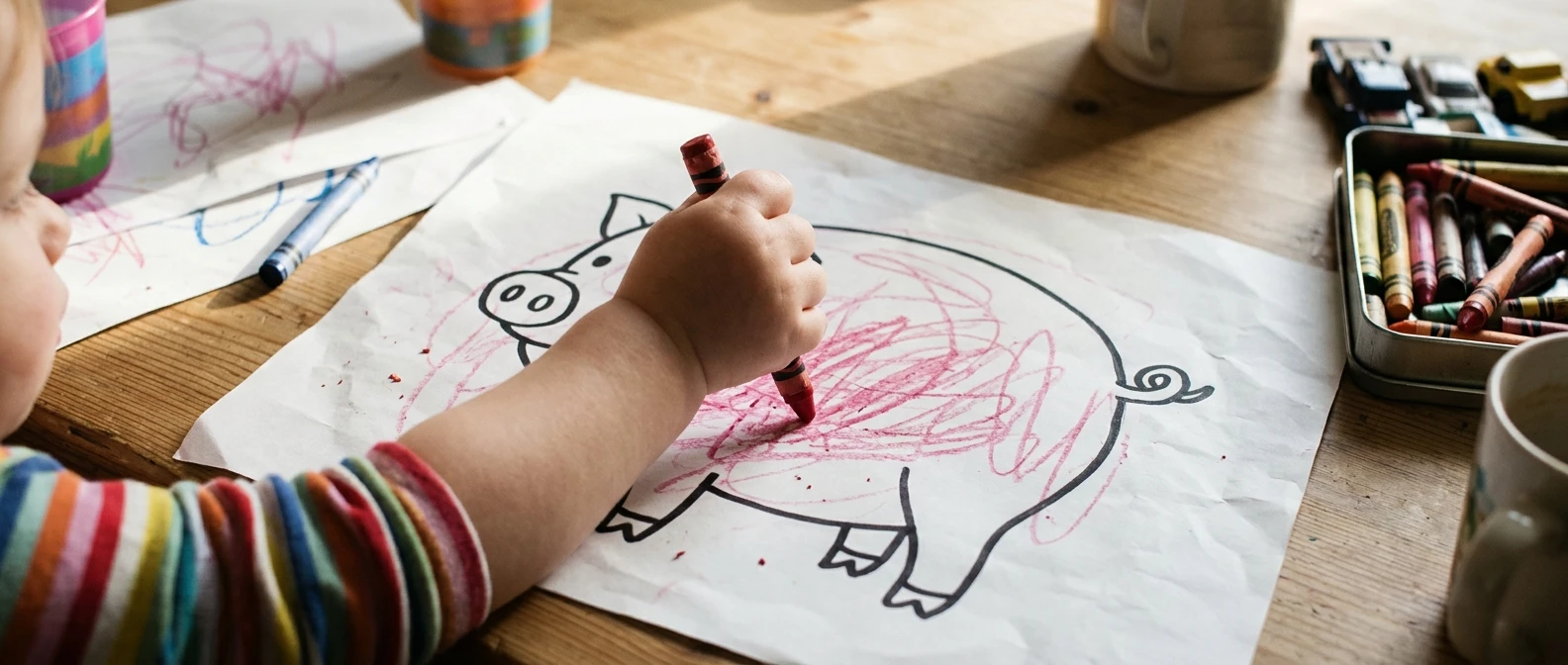
Hand a two-year-old a page full of tiny details and they will scribble for ten seconds, then wander off. Hand them a page with a fat, friendly cow and plenty of empty space, and they will stay a little longer. Farm animal coloring pages for toddlers work best when the picture is simple enough for a small hand to finish.
Why big, simple shapes make coloring easier for toddler hands
Toddlers are still building control in their hands and wrists. Most color with their whole arm, using a fist grip, so their marks are wide and wobbly. A thin outline with narrow gaps asks for precision they do not have yet.
Thick outlines and large open areas fit the way they actually move. A round pig belly or a big sheep body gives them room to scribble back and forth and still feel like they colored the animal. There are no tiny spaces to get frustrated over, so the page feels like a win.
Simple shapes also help with recognition. A toddler can point at the page and say “cow” because the outline looks like a cow, with a big head, four legs and no clutter around it.
Meet the farm crew
A good toddler set sticks to animals they already know from picture books and songs:
- Cow: a big, blocky body with large spots to fill in.
- Pig: a round shape and a curly tail, easy to scribble pink.
- Chicken: a plump body that works for red, yellow or whatever color they pick.
- Sheep: a cloud-like body with lots of open space.
- Duck: a simple rounded shape that is quick to finish.
- Horse: a longer outline for slightly older toddlers who want a bigger challenge.
Start with the animal your child already loves. If they make a “moo” sound every time they see a cow, that page goes first.
Coloring is more than just a fun activity for kids! It can support creativity, improve focus, reduce stress, and promote relaxation in both children and adults. Discover the 11 Health Benefits of Coloring for Kids and Adults to learn how this simple activity can support overall well-being.
How to print and set up in under two minutes
Use standard letter-size paper, and print on plain white copy paper or slightly heavier paper if you have it. Heavier paper holds up better under enthusiastic pressing and a stray splash of water.
Tape the page to the table or tray with painter’s tape. Toddlers push paper around, and a page that slides away is a common reason they quit. Set out three or four crayons instead of the whole box, since too many choices can be overwhelming at this age.
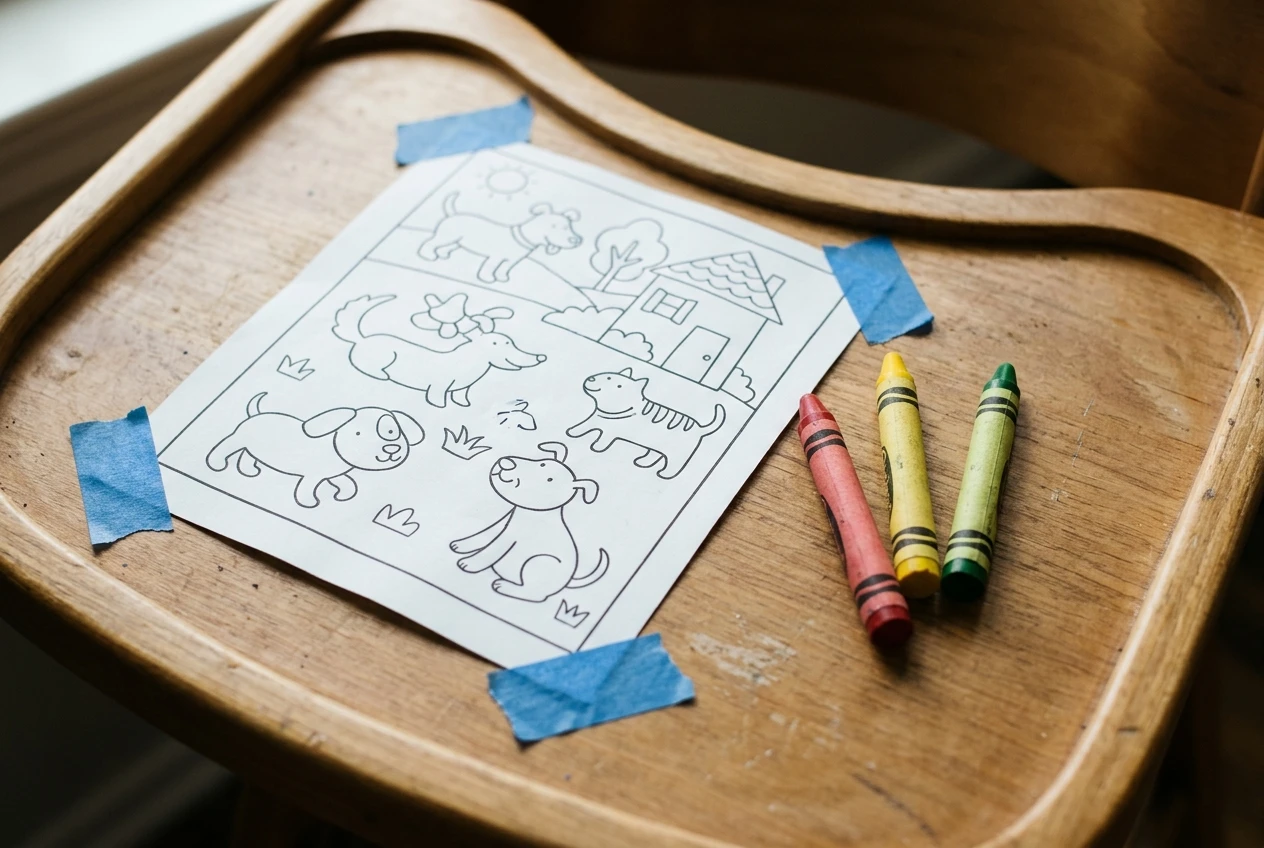
Print two copies of each page. One is for coloring now, and the other is a backup for the day the first one gets crumpled, torn or colored with a spoon.
Chunky crayons and washable markers that suit little fingers
The tool matters as much as the page. Look for these:
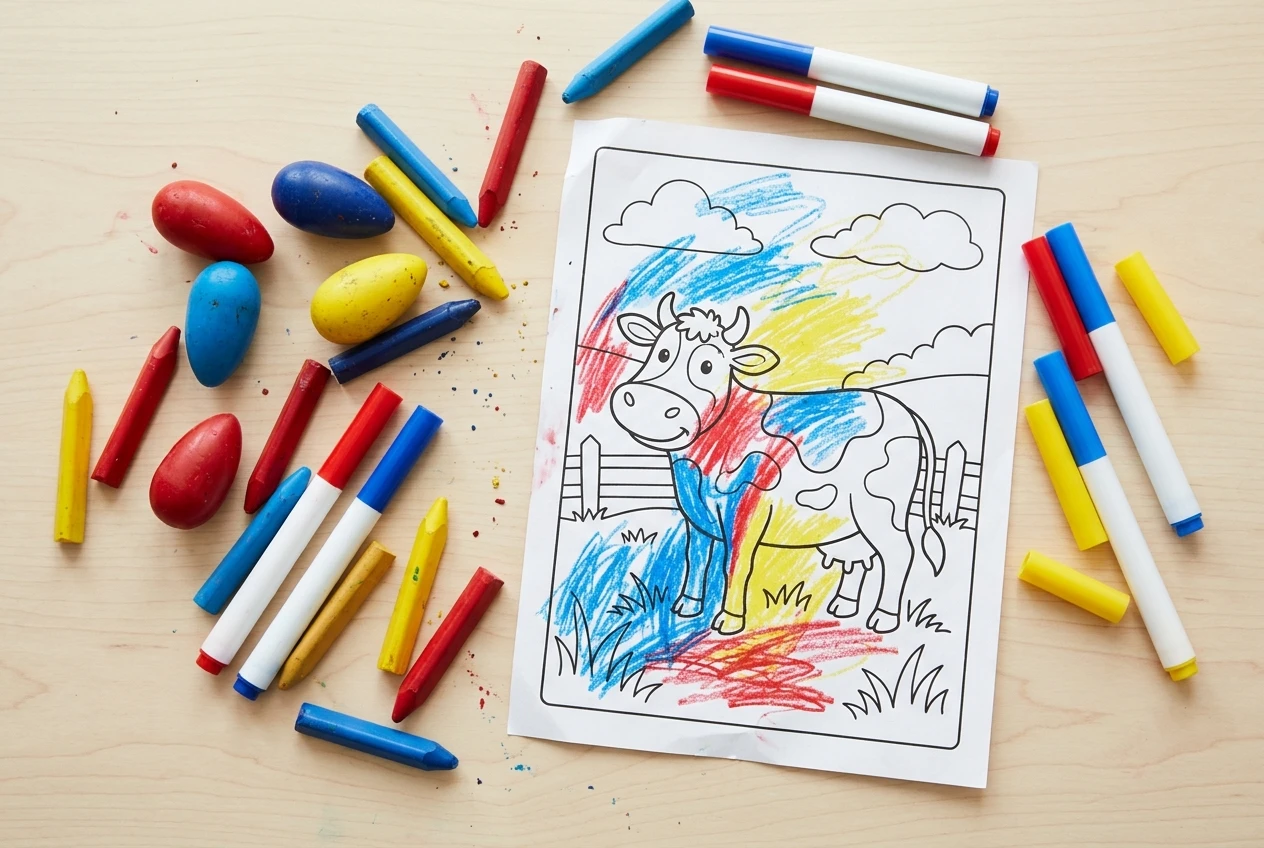
- Chunky or egg-shaped crayons, which fit a fist grip and are harder to snap in half.
- Triangular crayons, which sit more naturally between the fingers and encourage a better grip over time.
- Washable markers with a broad tip, which give bright color with almost no pressure.
- Washable labels: read the packaging, since “washable” and “non-toxic” are what you want on anything going near a toddler.
Skip tiny pencils and fine-tip markers for now. They are hard to hold and easy to drop, and they tend to make the page frustrating.
Make-believe ideas: turning each page into a barnyard game
Coloring lasts longer when it turns into play. Try one of these with each page:

- Animal sounds: ask what the cow says before you color, then make the sound with every stroke.
- Color choices: ask “What color should the pig be today?” Purple pigs are allowed.
- Feed the animals: pretend to give the colored duck a snack, then let your child “feed” it with a crayon.
- Barnyard parade: when a few pages are done, line them up on the floor and march the animals to the barn, which can be a cardboard box.
- Hide and seek: tuck a finished page somewhere in the room and ask where the sheep went.
None of this needs props. Your voice and a little silliness are enough.
What to do when your toddler scribbles outside the lines (or eats the crayon)
Scribbling outside the lines is normal. At this age, coloring is about making marks and seeing color appear, and staying in the lines is a skill for later. Praise the effort and the color choices instead of how neat it looks.
If crayons keep heading toward the mouth, stay close and offer a different activity for a few minutes, then try again. Many toddlers go through a phase of tasting everything. Check that your crayons are labeled non-toxic, and if your child swallows a large amount or you are worried, contact your pediatrician or poison control.
If your toddler loses interest after one minute, that counts as a successful session. Put the page away and bring it out again tomorrow.
Simple ways to keep the fun going after the page is done
A finished page can be more than something for the recycling bin:
- Stick it on the fridge and name the animal each time you pass.
- Cut out the colored animals and glue them to craft sticks for puppet play.
- Make a farm wall by taping up each new animal as it is finished.
- Talk about the page at dinner: “Who did you color today?”
Your child sees their work displayed and hears you talk about it, which encourages them to pick up a crayon again.
If you would like a ready-made collection to keep at the kitchen table, here is my book on Amazon, Farm Animals Coloring Book for Toddlers. Take a look and see if it suits your little one.